
Buying vs. Leasing a Car: How the Math Really Works

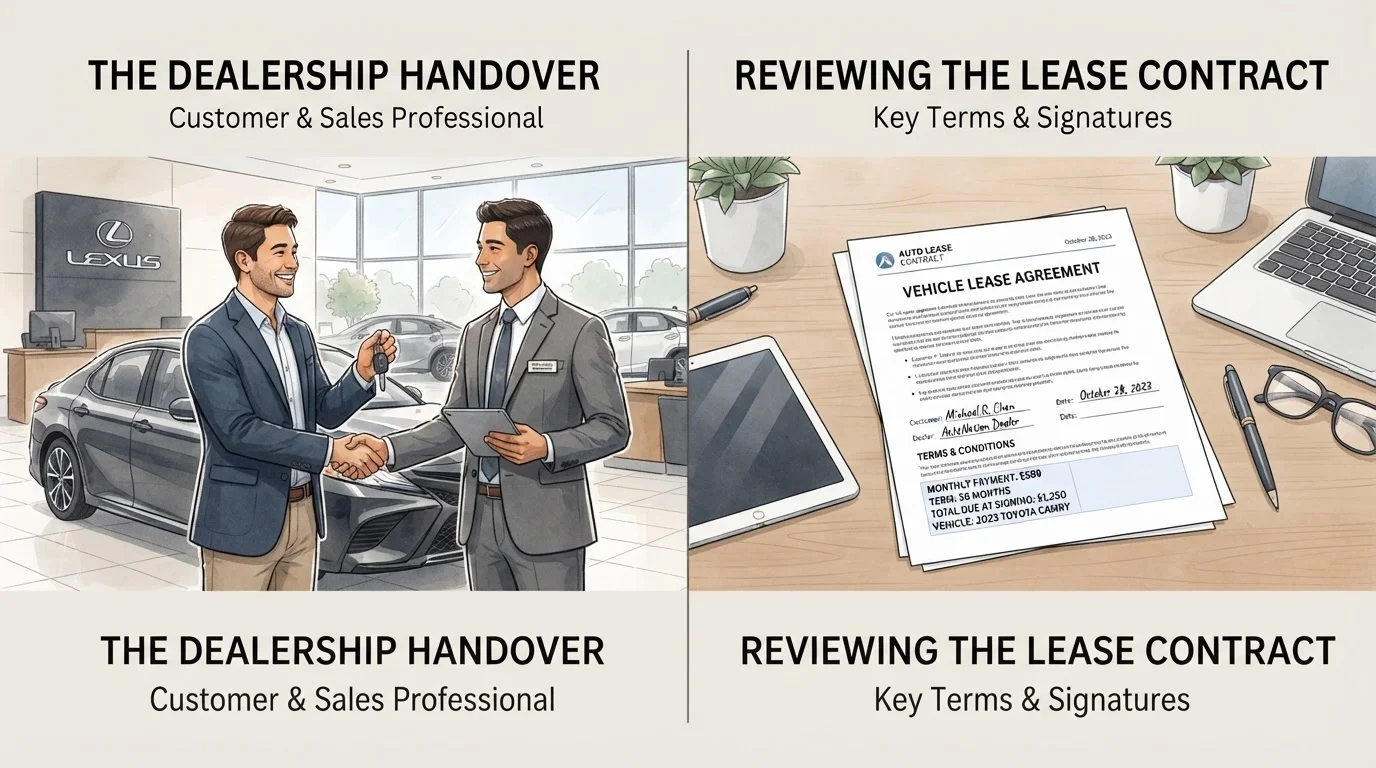
Photo: ConfiReads.com | Blogs For Inquisitive Minds editorial
Key Takeaways
- Buying costs more monthly but builds equity; leasing offers lower payments with no ownership at the end.
- Total cost of buying is typically lower over 7-10 years once a loan is paid off.
- Lease agreements include mileage caps and wear standards that can trigger unexpected fees.
- Down payments, residual values, and money factors significantly affect the true cost of a lease.
- Your driving habits, financial goals, and how long you keep vehicles should drive the decision.
- Neither option is universally better - the math depends heavily on individual circumstances.
What You're Actually Paying For in Each Option
When you buy a car, you're financing or paying the full purchase price. Each loan payment reduces principal and interest until you own the vehicle outright. After payoff, your only ongoing costs are insurance, maintenance, and fuel - a major reason buying wins on total cost over long time horizons.
When you lease a car, you're paying for the vehicle's depreciation during the lease term, plus a finance charge (called the money factor) and fees. The dealership retains ownership throughout. At the end of the lease - typically 24 to 39 months - you return the car or exercise a purchase option at the pre-set residual value.
This distinction matters: a lease payment on a $38,000 vehicle might run $420/month, while a 60-month purchase loan at 7% APR on the same vehicle could be around $750/month. But the buyer eventually owns something; the lessee doesn't. For a deeper look at all the costs layered into vehicle ownership, see our breakdown of true car ownership costs.
| Criterion | Buying | Leasing |
|---|---|---|
| Monthly payment | Higher (full price + interest) | Lower (depreciation + fees) |
| Ownership at end | Yes - vehicle is yours | No - return or buy out |
| Mileage limits | None | Typically 10,000-15,000/year |
| Customization | Unrestricted | Restricted by lease terms |
| Long-term cost (7+ years) | Lower once loan is paid off | Higher - payments never stop |
| Depreciation risk | Absorbed by owner | Absorbed by lessor |
| Early exit flexibility | Sell or trade any time | Penalties for early termination |
| Maintenance responsibility | Owner's responsibility | Usually under warranty during term |
The Math Over Time: When Each Approach Wins
Over a 3-year window, leasing often looks cheaper on paper. But extend that horizon to 7 or 10 years - accounting for multiple successive leases - and buying typically wins. A driver who leases continuously never exits the payment cycle. A driver who buys and holds a paid-off vehicle for four or five years after the loan closes dramatically lowers their average monthly transportation cost.
~50%
Average new car depreciation over 5 years
Industry data consistently shows new vehicles lose roughly half their value within five years, a key factor in the buyer's total cost equation.
$738
Average monthly new car loan payment (2024)
Experian's State of the Automotive Finance Market report tracked average new vehicle loan payments rising steadily through 2023-2024.
$597
Average monthly new car lease payment (2024)
Experian data shows average new vehicle lease payments remain meaningfully below comparable loan payments, reflecting the depreciation-only billing structure.
There are exceptions. If you make a large down payment on a purchase, you tie up capital that could be working elsewhere - an opportunity cost that leasing avoids. For drivers with strong investment discipline, the cash-flow difference between a lease and a loan payment, invested consistently, could partially offset the equity advantage of buying. That trade-off is explored further in our article on financing versus paying cash for a car.
Depreciation also complicates the buyer's math. New vehicles lose roughly 20% of their value in the first year and up to 50% within five years on average, though this varies by make, model, and market conditions. Buyers absorb that depreciation; lessees effectively pre-pay it, then hand it back.
Hidden Costs That Change the Calculation
Both paths carry costs that don't appear on the window sticker or the monthly payment line. Lease agreements typically include:
- Mileage overage charges: often $0.15-$0.25 per mile beyond the annual cap
- Excess wear fees: charges for dings, tire wear, or interior damage deemed beyond normal use
- Acquisition and disposition fees: upfront and end-of-lease administrative charges that can total $1,000 or more
Buyers face a different set of ongoing expenses that can catch owners off guard - registration renewals, scheduled maintenance after the warranty expires, and eventual repair costs as the vehicle ages. Our guide on annual ownership costs most drivers underestimate covers these recurring expenses in detail.
Lease Terms Vary Significantly by Lender
It's also worth noting that lease insurance requirements are often stricter. Lessors typically require lower deductibles and higher liability limits than a lender would for a purchase loan, which can push insurance premiums higher than drivers expect.
This article provides general financial and automotive information for educational purposes only. It is not personalized financial or legal advice. Consult a licensed financial adviser or automotive professional before making decisions about vehicle financing or leasing agreements.
The content on this site is for informational purposes only and is not a substitute for professional advice. Always consult a qualified professional for guidance specific to your situation.