
Synthetic vs. Conventional Motor Oil

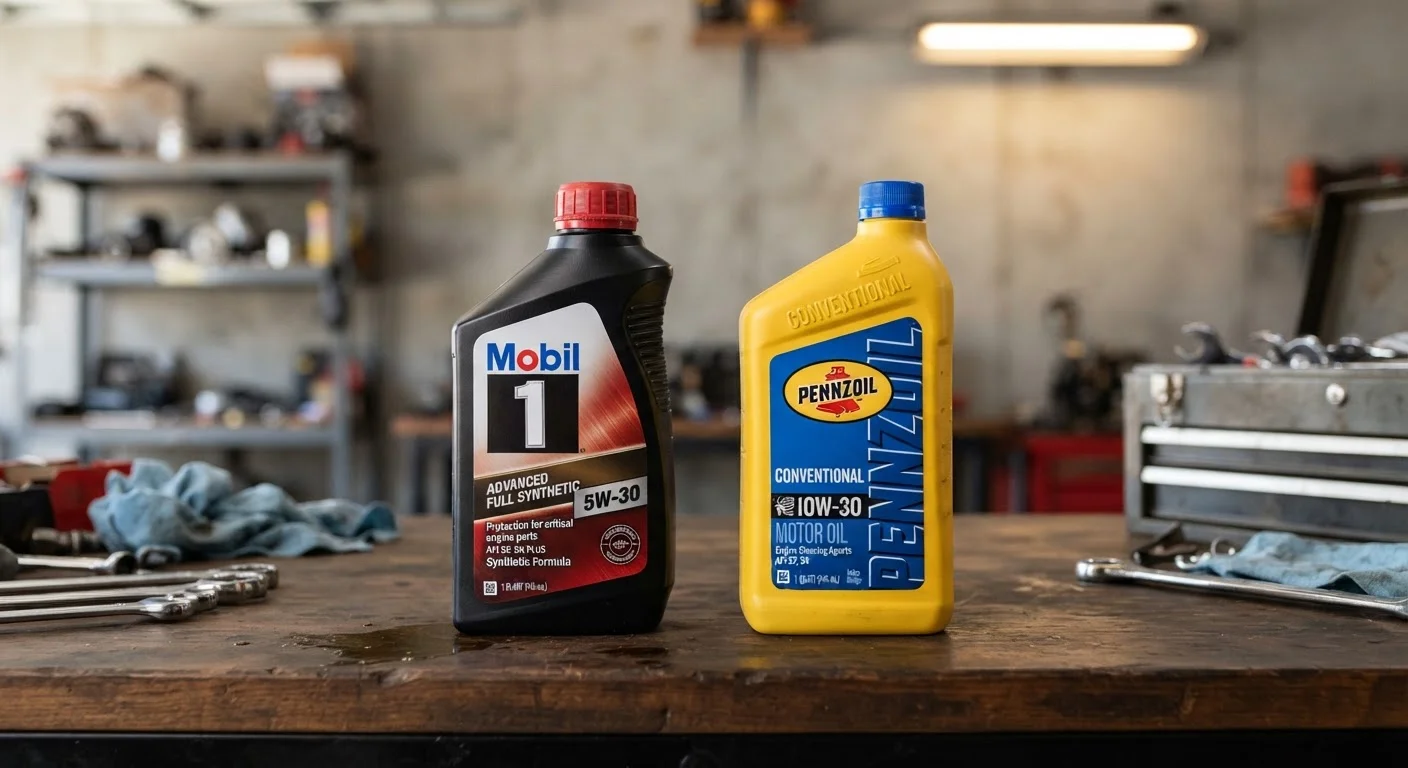
Photo: ConfiReads.com | Blogs For Inquisitive Minds editorial
Key Takeaways
- Synthetic oil is chemically engineered for superior lubrication; conventional oil is refined directly from crude petroleum.
- Synthetic oil typically lasts 7,500-10,000+ miles per change; conventional oil generally needs changing every 3,000-5,000 miles.
- Synthetic costs more per quart but fewer annual changes can offset the higher price over time.
- Most modern vehicles manufactured after 2010 are factory-specified for full synthetic oil.
- Always consult your owner's manual - the manufacturer's recommendation overrides general rules of thumb.
What Makes These Two Oils Different
At the most fundamental level, the difference comes down to how each oil is made. Conventional motor oil is refined from crude petroleum - it's processed to remove impurities, but it retains a naturally variable molecular structure. Synthetic motor oil, by contrast, is chemically synthesized from base compounds, giving engineers precise control over molecular size and uniformity.
That molecular consistency is the root of nearly every performance advantage synthetic oil claims. Uniform molecules reduce internal friction more effectively, resist thermal breakdown at high engine temperatures, and flow more readily when the engine is cold. Conventional oil, with its irregular molecular chains, degrades faster under heat and stress, which is why it requires more frequent replacement.
There's also a middle-ground product - synthetic blend oil - which mixes synthetic and conventional base stocks. It offers a moderate performance and cost improvement over straight conventional, though it doesn't match full synthetic's protection or longevity.
Your Owner's Manual Has the Final Word
Performance, Protection, and Real-World Trade-Offs
For most everyday drivers, the clearest practical difference shows up in two areas: cold-start protection and high-temperature stability.
On a cold morning, oil must flow through the engine within seconds of startup. Conventional oil thickens more at low temperatures, which means the engine runs briefly without full lubrication - a moment that accounts for a disproportionate share of long-term wear. Synthetic oil maintains lower viscosity in the cold, reaching critical engine surfaces faster.
Under sustained heat - such as towing, highway driving, or stop-and-go traffic in summer - conventional oil oxidizes and breaks down more quickly, losing its protective film. Synthetic resists oxidation significantly longer, maintaining viscosity and lubrication properties throughout its service life.
| Criterion | Synthetic Motor Oil | Conventional Motor Oil |
|---|---|---|
| Base composition | Chemically engineered molecules | Refined crude petroleum |
| Typical change interval | 7,500-10,000+ miles | 3,000-5,000 miles |
| Cost per quart | ~$8-$13 | ~$4-$7 |
| Cold-start performance | Superior low-temp flow | Thickens more in cold |
| High-temp stability | Resists oxidation longer | Degrades faster under heat |
| Best engine type | Modern, turbocharged, high-perf | Older, simpler, naturally aspirated |
| Environmental output | Fewer used-oil disposals per year | More frequent disposal |
It's worth noting that for most light-duty driving on a well-maintained older vehicle, conventional oil changed on schedule provides entirely adequate protection. The performance gap matters most in demanding conditions or modern engine designs.
Cost, Change Intervals, and the Long-Term Math
Synthetic oil typically costs $8-$13 per quart compared to $4-$7 for conventional - a meaningful difference at the pump. However, the cost calculation becomes more nuanced when you factor in change intervals.
2x
Longer drain intervals vs. conventional
Full synthetic oils commonly support drain intervals twice as long as conventional oil, according to industry guidance from major oil manufacturers.
~40%
Price premium per quart for synthetic
Synthetic motor oil typically costs roughly 40-80% more per quart than conventional, though pricing varies by brand, viscosity grade, and retailer.
A driver using conventional oil at 5,000-mile intervals might need four to five oil changes per year. A driver on full synthetic at 10,000-mile intervals might need only two or three. Depending on labor costs and oil prices in your area, the annual totals can come close to parity - sometimes slightly favoring synthetic when factoring in technician fees.
To understand what interval is right for your specific vehicle and driving habits, see our guide to oil change intervals - it breaks down exactly what drives those schedules beyond the old 3,000-mile rule.
One important caution: switching to synthetic does not mean you can ignore your owner's manual's service intervals. Manufacturer specs account for your specific engine tolerances, and exceeding recommended intervals - even with synthetic - can void powertrain warranty coverage.
For a broader look at car ownership myths that cost drivers money, including oil change misconceptions, that resource is worth reviewing before your next service visit. And if you've ever wondered what neglecting oil changes actually does to an engine, our piece on what happens when you skip an oil change walks through the damage in plain terms.
The content on this site is for informational purposes only and is not a substitute for professional advice. Always consult a qualified professional for guidance specific to your situation.