
The Anatomy of an Insurance Policy: What Every Section Actually Means

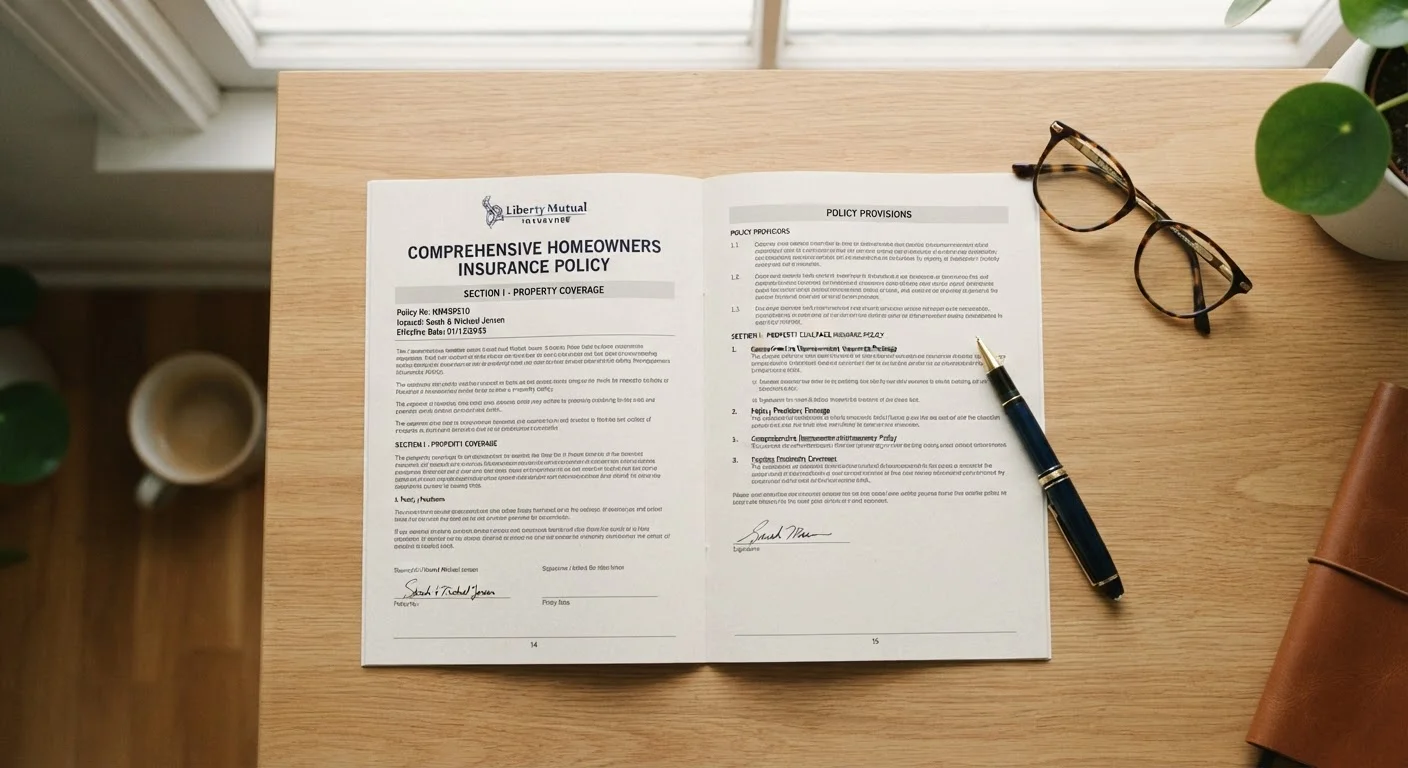
Photo: ConfiReads.com | Blogs For Inquisitive Minds editorial
Key Takeaways
- Every standard insurance policy is divided into several named sections, each with a different legal function.
- The declarations page is a quick-reference summary, but the real coverage details live deeper in the policy.
- Exclusions are just as important as covered perils - knowing what is not covered prevents costly surprises.
- Conditions spell out your obligations; failing to meet them can result in a denied claim.
- Endorsements and riders can expand or restrict the base policy - always read them alongside the main document.
- Consulting a licensed insurance agent or attorney is the best way to clarify anything you don't understand.
Why Policy Structure Matters
Most people tuck their insurance policy in a drawer and never read it - until something goes wrong. By then, it's too late to be surprised by a term, a limit, or an exclusion that was there the whole time. Understanding how a policy is organized lets you find the information you need quickly and evaluate whether coverage actually fits your situation before you need to file a claim.
Policies aren't written in random order. Each section has a defined job, and insurers structure them consistently so that regulators, agents, and courts can interpret them the same way. Once you learn the anatomy, you can apply it to virtually any policy - auto, homeowners, renters, health, or life. For a deeper look at coverage categories themselves, see the Coverage Types hub.
The Six Core Sections of a Standard Policy
1. Declarations Page
The declarations page (commonly called the "dec page") is the face sheet of your policy. It summarizes who is insured, what property or risk is covered, the policy period, your coverage limits, and your premium. Think of it as the label on the package - useful at a glance, but not the whole story. Our companion article The Policy Declarations Page: Everything It Tells You at a Glance walks through every line item in detail.
2. Definitions
This section is one of the most underread and most important. Insurers assign precise, sometimes narrow meanings to ordinary words - "occurrence," "residence," "bodily injury." When a word appears in quotes or italics elsewhere in the policy, it means exactly what the definitions section says, not what you might assume. Skimming this section often explains disputes before they start.
3. Insuring Agreement
The insuring agreement is the insurer's core promise. It describes, in broad terms, what events or losses the company agrees to cover and what it will pay or do in response. This is the heart of the contract. Everything else in the policy either clarifies, limits, or conditions that promise.
“An insurance policy is a contract, and like any contract, what matters most is the precise language - not the salesperson's summary or the marketing brochure. The insuring agreement and the exclusions together define the real deal.”
— J. Robert Hunter, Former Texas Insurance Commissioner and Director of Insurance, Consumer Federation of America
4. Exclusions
Exclusions carve out situations the insurer will not cover. A standard homeowners policy, for example, typically excludes flood and earthquake damage. A general liability policy typically excludes intentional acts. Exclusions are not hidden - they are listed explicitly - but they are easy to overlook. Reading them carefully is the fastest way to spot gaps you may want to fill with a separate policy or endorsement.
5. Conditions
Conditions are your obligations under the contract. Common conditions include notifying the insurer promptly after a loss, cooperating with any investigation, submitting a proof-of-loss form, and maintaining the insured property in reasonable condition. Failing to meet a condition doesn't automatically void your policy, but it can give the insurer a valid reason to deny or reduce a claim.
6. Endorsements and Riders
Attached to the back of many policies are endorsements - amendments that modify the base contract. They can broaden coverage (adding jewelry to a homeowners policy, for instance), narrow it, or clarify a specific term. Endorsements take precedence over conflicting language in the main policy. Always read them as part of the whole document, not as extras.
Build a Simple Policy Review Checklist
Reading Your Policy With Confidence
A good starting strategy: read the dec page to orient yourself, then jump to the insuring agreement to understand the basic promise. Next, go straight to the exclusions - knowing what isn't covered is just as important as knowing what is. Finally, check the conditions and any endorsements.
1 in 3
Homeowners who never read their full policy
Industry surveys consistently find that a large share of policyholders rely on their agent's verbal summary rather than reading the actual policy document.
~40%
Of claim disputes tied to exclusions or conditions
According to insurance industry analysts, a significant share of contested claims involve disagreements about exclusions or the insured's failure to satisfy a policy condition.
If something is unclear, don't guess. Policy language has legal weight, and ambiguities are sometimes interpreted in favor of the insured - but courts prefer clear understanding over litigation. For cost-related terms you'll encounter throughout - premiums, deductibles, coinsurance - see our Insurance Cost Terms Every Policyholder Should Know. And if you want a broader glossary of policy language, Insurance Terminology Decoded is a useful lookup tool.
If you're concerned your current policy may not protect you as fully as you think, Signs Your Policy May Not Protect You as Well as You Think covers the warning signs to watch for. For questions specific to your situation, a licensed insurance agent or attorney is the right resource.
This article is for general informational purposes only and does not constitute insurance, legal, or financial advice. Coverage terms, exclusions, and regulations vary by policy and state. Always read your actual policy documents and consult a licensed insurance professional for guidance specific to your needs.
Frequently Asked Questions
The content on this site is for informational purposes only and is not a substitute for professional advice. Always consult a qualified professional for guidance specific to your situation.