
Coverage Limits vs. Liability Limits: Knowing the Difference

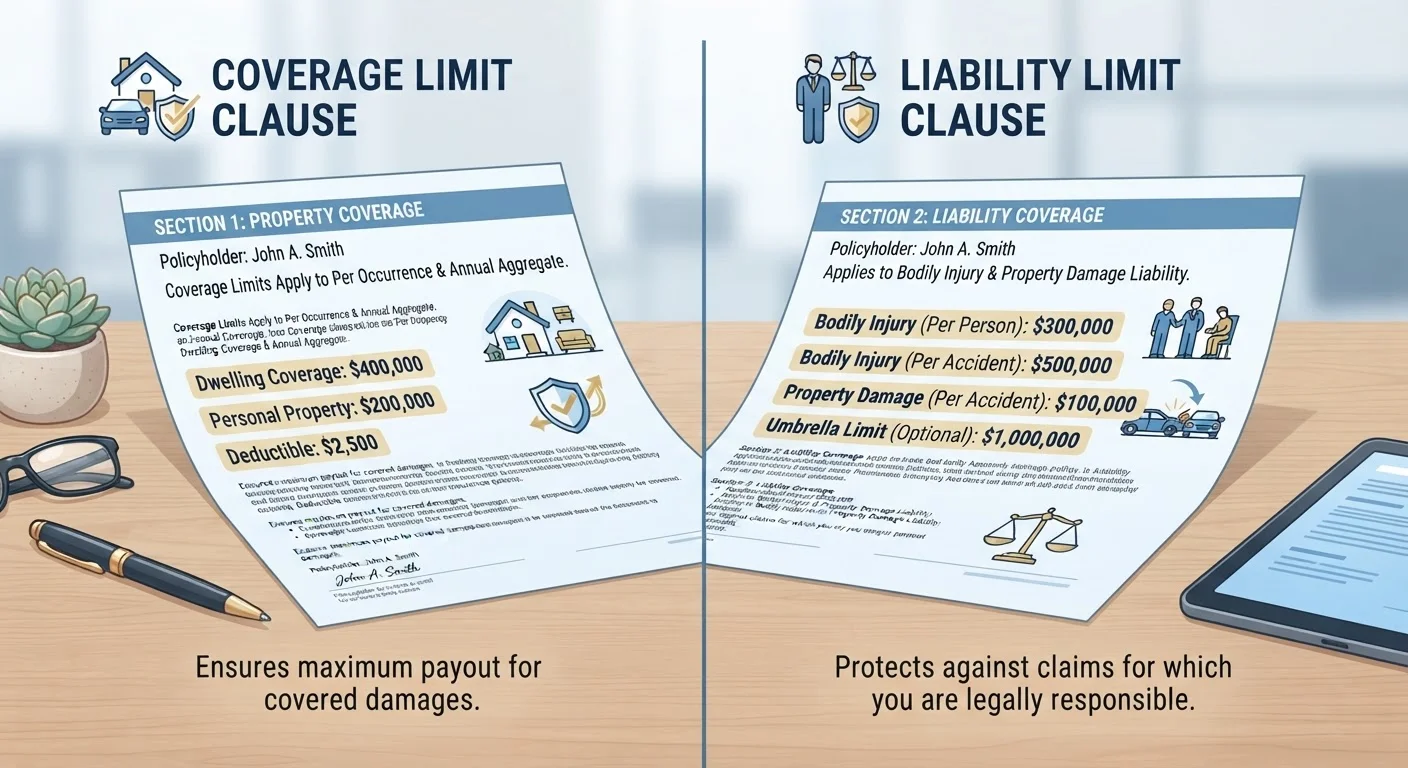
Photo: ConfiReads.com | Blogs For Inquisitive Minds editorial
Key Takeaways
- Coverage limits cap what your insurer pays for a covered loss - regardless of who is at fault.
- Liability limits specifically cap what your insurer pays when you are legally responsible for harming others.
- Liability limits are a subset of coverage limits, not a separate, unrelated concept.
- Carrying liability limits that are too low can expose your personal assets to lawsuits.
- Always review both types of limits when comparing or renewing any policy.
What Coverage Limits Actually Mean
A coverage limit is the maximum dollar amount an insurer will pay for a covered loss under a given policy or category within that policy. Think of it as a ceiling - once that ceiling is hit, you're responsible for anything above it out of pocket.
Coverage limits appear across nearly every insurance type. On a homeowners policy, your dwelling coverage limit is the most your insurer will pay to rebuild your home. On a health plan, an annual benefit maximum (where it still applies) caps total payouts for the year. On an auto policy, collision coverage limits define the most you'll receive if your vehicle is damaged in a crash.
These limits can apply per occurrence (a single event), per claim, or in aggregate over the policy period. Reading which structure applies in your policy matters - two policies with the same limit number can behave very differently depending on how that limit is structured. For a broader look at how limits connect to coverage categories, the Coverage Types hub is a useful starting point.
What Liability Limits Mean - and Why They're Different
Liability limits are a specific type of coverage limit, but they only apply when you are legally responsible for causing harm to someone else. They do not protect your own property or cover your own medical bills - they protect you from claims made by third parties.
A standard auto liability policy, for example, might list limits as 100/300/100. That shorthand means: $100,000 per person for bodily injury, $300,000 per accident for bodily injury total, and $100,000 for property damage. If you cause an accident that injures multiple people and the total claims exceed $300,000, you are personally responsible for the remainder.
The same principle applies to homeowners and renters insurance. Your personal liability coverage kicks in if a guest is injured on your property and sues you - but only up to the stated limit. Beyond that, your personal assets are at risk. This is why many financial advisors suggest reviewing liability limits carefully, particularly if you own significant assets. You may also want to read about warning signs your policy may not protect you as well as you think.
| Criterion | Coverage Limits | Liability Limits |
|---|---|---|
| What it caps | Total insurer payout for any covered loss | Payout when you're legally at fault for others' harm |
| Who it protects | You and your property | Third parties making claims against you |
| Where it appears | Every insurance policy type | Auto, homeowners, renters, umbrella policies |
| Common structure | Per occurrence, per claim, or aggregate | Per person / per accident / property damage |
| Risk if too low | You pay out-of-pocket for losses above the cap | Your personal assets can be seized to satisfy judgments |
| Relationship to each other | Broad term that includes all policy ceilings | A specific subset of coverage limits |
How Confusing the Two Can Cost You
The most common mistake is assuming that because you have a high coverage limit, you're fully protected in liability situations - or vice versa. A generous dwelling replacement limit on your homeowners policy tells you nothing about how much protection you have if someone sues you after a slip-and-fall on your walkway.
Equally, people sometimes see a high liability limit and assume it covers damage to their own vehicle in a crash. It doesn't. Liability coverage only flows outward - toward others. To cover your own vehicle, you'd need collision or comprehensive coverage, each with its own separate limit.
Umbrella Policies Add a Layer Above Both
Confusing these two can also lead to gaps that aren't obvious until a claim is filed. Our article on common misunderstandings about what insurance covers covers many of the same blind spots readers run into. For an even deeper look at where policies commonly fall short, see coverage gaps most people don't realize they have.
1 in 6
Drivers who are uninsured on U.S. roads
According to the Insurance Research Council, roughly 1 in 6 drivers lacks insurance, making adequate liability limits even more important for those who do carry coverage.
$500K+
Average jury award in auto liability cases
Industry data from the Insurance Information Institute indicates serious auto accident liability verdicts frequently exceed standard minimum policy limits, leaving underinsured drivers exposed.
This article provides general insurance education and is not personalized insurance or legal advice. Coverage terms, limits, and regulations vary by insurer, policy, and state. Always read your actual policy documents and consult a licensed insurance agent for guidance specific to your situation.
The content on this site is for informational purposes only and is not a substitute for professional advice. Always consult a qualified professional for guidance specific to your situation.